
Be first to read the latest tech news, Industry Leader's Insights, and CIO interviews of medium and large enterprises exclusively from Energy Tech Review
![Talen Energy [NASDAQ: TLN]: Redefining Energy Delivery for Digital Infrastructure](https://www.energytechrevieweurope.com/uploaded_images/53-dkdh6.jpg "Talen Energy [NASDAQ: TLN]: Redefining Energy Delivery for Digital Infrastructure")
Electricity demand is being reshaped by the rise of digital infrastructure. Data centers, cloud platforms, and AI-driven workloads operate continuously, drawing large, predictable power loads. As a result, the valuation of generation is evolving, with greater emphasis on reliability, consistency and the ability to sustain high-density consumption. Power providers are rethinking how assets are deployed to align with demand patterns that are constant and increasingly sensitive to disruption. Talen Energy operates within this evolving landscape, leveraging a portfolio of nuclear and natural gas assets to deliver continuous baseload power alongside dispatchable flexibility. This combination supports the growing energy requirements of digital infrastructure while maintaining reliable performance across competitive power markets. Coordinated Generation as an Operating Model Talen Energy’s portfolio is anchored by the Susquehanna nuclear power plant, which provides a steady stream of carbon-free baseload power. The plant’s output forms the backbone of its generation capacity. Alongside it, natural gas facilities introduce flexibility, allowing the company to adjust supply in response to fluctuations in demand or grid conditions. The interaction between these assets is intentional. Nuclear generation maintains continuity. Gas-fired capacity responds to variability. Together, they create a coordinated operating model that supports both reliability and adaptability. Participation in wholesale electricity markets further strengthens this coordination. Here, generation is dispatched based on real-time pricing, demand signals and transmission constraints. Decisions are made with both economic and operational considerations in mind, ensuring that capacity is deployed efficiently while maintaining system balance. Infrastructure connectivity plays a central role. Talen Energy’s assets are located in regions connected to major transmission networks, enabling efficient power delivery to areas with significant demand. The positioning reduces bottlenecks and supports consistent delivery, particularly for customers with high and continuous energy requirements.
![Talen Energy [NASDAQ: TLN]: Redefining Energy Delivery For Digital Infrastructure](https://www.energytechrevieweurope.com/newstransfer/upload/1-sowuk-.jpg "Talen Energy [NASDAQ: TLN]: Redefining Energy Delivery For Digital Infrastructure")
Top Clean Energy Ion Exchange Membranes Solution 2026
Why are PFAS-based membranes facing increasing global regulatory and market cost pressures? Orion Polymer is a membrane material company specializing in clean and emerging energy technologies such as green hydrogen. At its core, the company develops non-PFAS ion exchange membranes built on a single scalable material platform designed for multiple clean energy applications. Two primary ion exchange membranes are used with today’s green hydrogen systems, proton exchange membranes (PEM) and anion exchange membranes (AEM). PEM currently dominates the market, but these materials are based on per- and polyfluoroalkyl substances (PFAS) that face increasing environmental and regulatory scrutiny and rely on precious metals to operate. Orion Polymer’s AEM platform provides an alternative that avoids PFAS while enabling cost advantages through alkaline system design. “We are a one-stop shop for all ion exchange membrane technology,” says Dr. Chulsung Bae, CEO. “Using the same material platform, we offer multiple membrane types applicable across clean energy systems.”.

Solar Powered Yachting Solutions

The sustainability wave is carrying the luxury yachting world into a smarter, cleaner era. At the centre of that movement is Silent Yachts, which has turned the once-unthinkable concept of fully solar-electric yachting into reality. Its purpose-built electric propulsion proves that comfort and conscience can indeed share the same course. “Just as people associate Tesla with the EV revolution, Silent Yachts represents that same breakthrough for the marine world,” says Steve Bell, Chairman of the Board. “Our systems were designed from the ground up for electric propulsion, and that’s what makes the experience seamless.” With more than two dozen solar-electric yachts already in the water from the Mediterranean to the Caribbean, the green yachting pioneers are demonstrating that full solar propulsion works reliably at scale. This is redefining modern yacht ownership. For motor-yacht owners tired of fuel-heavy cruising and sailors seeking the ease of power without the complexity of rigging, it offers the best of both worlds. Each voyage unfolds without fumes, vibrations or emissions, while delivering savings of up to $4,000 per week on fuel. An eye for the finest details As a semi-custom yacht manufacturer, the company designs each vessel around how its owners actually live, whether that means reimagining interior layouts, selecting region-specific appliances or engineering systems that transition seamlessly between cruising grounds. One owner, for instance, spends summers in the Mediterranean before shipping his yacht to the Caribbean for winter. His vessel operates effortlessly on both 110- volt and 220-volt systems, switching power standards as smoothly as it crosses oceans.
Energy and Battery Solutions
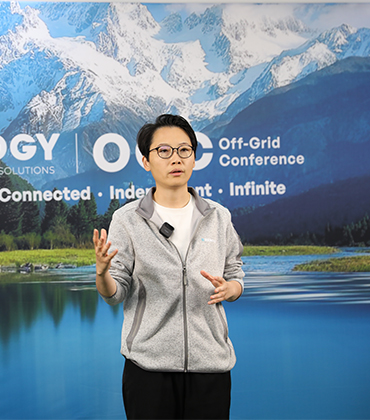
People today live in motion. Work is flexible, travel is fluid and communities are reshaping themselves beyond the limits of fixed infrastructure. Yet energy, the foundation of modern life, has not kept up with how we live. At the edges of the grid, reliable energy is still uneven. From families seeking independence on the road to communities building their first resilient power systems, these are the places where off-grid solutions can unlock real freedom. This is the world Renogy is helping transform. The company was founded on a simple belief: clean, dependable energy should be available to everyone. During her PhD research in renewable power systems, Dr. Yi Li, founder and CEO, discovered a critical gap in the market. Whether on a camping trip or in remote villages, the inability to access power limited experience, opportunity, and connection. Existing energy solutions were failing users not just technically, but because quality and efficiency were lost across a fragmented chain of manufacturers, integrators, distributors and dealers. A trip to Africa brought the challenge into sharp focus. She met communities living every day without electricity and saw how much possibility was lost in the dark. Energy access wasn’t just about convenience; it determined whether progress could happen at all. While this experience helped lay the foundation for Renogy, it was one of many research and field moments that shaped Dr. Li’s mission. From the beginning, the vision has been broader: integrated off-grid systems for RVs and other mobile platforms, homes, and remote communities worldwide, making energy independence simpler for everyone. “Our mission has always been to make renewable energy accessible to everyone, not just professionals or enthusiasts, but ordinary people who dream of energy freedom,” says Dr. Li. Renogy delivers that vision to life through three main product lines: mobile energy solutions, portable energy solutions, and home & residential energy solutions. Within this portfolio, Mobile Energy Solutions provide integrated systems for RVs, boats, and specialty vehicles, using modular components that fit compact spaces while maintaining dependable off-grid performance. For those who prefer simplicity, the company’s Portable Energy Solutions provide ready-to-use power stations that require no installation, offering immediate and reliable power for camping or emergencies. It was among the first to introduce this concept in 2015, years before portable power became a mainstream idea. At home, its Hybrid Energy Solutions combine solar generation, battery storage, and grid connection to create balanced systems that keep households powered with ease.
CXO INSIGHTS

Hefty Gas Prices are just a Symptom of a Greater Threat to Our Economy and National Security
Stephen Hanson, President and CEO, ACME Lithium

Boosting the Sustainability of Energy Programs
Maureen McDonald, Director of Energy services, Southland Industry
Policies And Technologies Driving Clean Energy Transition In The U.S.
Brendan Andrews, Vice President, Energy & Infrastructure, Bureau Veritas North America

Unlocking A Clean Energy Future
Bill Quinlan, President of Transmission and Offshore Wind Projects, Eversource Energy

Investment Is The Key To A Clean Energy Future
Leslie Myers, Product Manager, Renewables, Puget Sound Energy


IN FOCUS

Energy Storage Innovation: Ion Exchange Membrane Performance Advances
Advances in ion exchange membranes improve efficiency, durability, and ion transport, supporting hydrogen production and strengthening clean energy electrochemical systems.

Trends in the Clean Energy Membrane Sector
Clean energy ion exchange membranes are advancing through disciplined scaling, supply resilience, and integration alignment within expanding industrial energy infrastructure.
EDITORIAL
Powering the Future with Smarter Materials
As clean energy systems scale, the intersection of material science and infrastructure design is redefining how energy is produced, delivered, and sustained. In this issue of Energy Tech Review, we explore how advancements across both foundational materials and generation models are enabling more efficient, reliable, and scalable energy ecosystems.
At the forefront of this edition is the complimentary cover story on Talen Energy [NASDAQ: TLN], which reflects a decisive shift in how power generation aligns with the demands of digital infrastructure. As data centers and AI-driven workloads introduce continuous, high-density energy consumption, Talen Energy’s coordinated portfolio of nuclear baseload and flexible natural gas generation delivers both stability and adaptability. Its ability to align asset deployment with real-time demand patterns underscores a model in which reliability, consistency, and infrastructure positioning define competitive advantage in modern energy markets.
Recognized as Top Clean Energy Ion Exchange Membranes Solution 2026, Orion Polymer advances non-PFAS ion exchange membrane technologies. At the materials layer, the company has developed a unified, scalable platform adaptable across multiple clean energy applications. Its anion-exchange membrane technology provides a compelling alternative to conventional proton-exchange membranes by eliminating reliance on costly precious metals while enabling alkaline system design. By addressing durability, cost and manufacturing constraints, Orion Polymer is helping remove key barriers to the broader adoption of green hydrogen and related energy systems.
Leadership perspectives further strengthen the discussion around energy transformation. Bill Quinlan, President of Transmission and Offshore Wind Projects at Eversource Energy, emphasizes the importance of building a resilient and modern grid to support large-scale clean energy integration while ensuring long-term reliability. Enoch Charles, Information Technology - Smart Grid Transport Manager at CenterPoint Energy, highlights the growing role of IoT, fiber networks and smart grid transport systems in enabling interconnected energy ecosystems capable of supporting digital and physical convergence.
As the energy landscape evolves, progress will be defined by the ability to integrate material innovation, intelligent infrastructure, and disciplined execution. We invite readers to explore the full issue and engage with the ideas shaping the future of energy.
