

Be first to read the latest tech news, Industry Leader's Insights, and CIO interviews of medium and large enterprises exclusively from Energy Tech Review
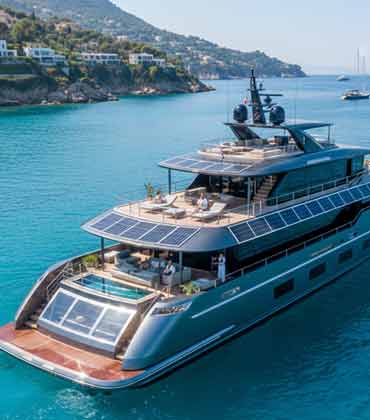
The sustainability wave is carrying the luxury yachting world into a smarter, cleaner era. At the centre of that movement is Silent Yachts, which has turned the once-unthinkable concept of fully solar-electric yachting into reality. Its purpose-built electric propulsion proves that comfort and conscience can indeed share the same course. “Just as people associate Tesla with the EV revolution, Silent Yachts represents that same breakthrough for the marine world,” says Steve Bell, Chairman of the Board. “Our systems were designed from the ground up for electric propulsion, and that’s what makes the experience seamless.” With more than two dozen solar-electric yachts already in the water from the Mediterranean to the Caribbean, the green yachting pioneers are demonstrating that full solar propulsion works reliably at scale. This is redefining modern yacht ownership. For motor-yacht owners tired of fuel-heavy cruising and sailors seeking the ease of power without the complexity of rigging, it offers the best of both worlds. Each voyage unfolds without fumes, vibrations or emissions, while delivering savings of up to $4,000 per week on fuel. An eye for the finest details As a semi-custom yacht manufacturer, the company designs each vessel around how its owners actually live, whether that means reimagining interior layouts, selecting region-specific appliances or engineering systems that transition seamlessly between cruising grounds. One owner, for instance, spends summers in the Mediterranean before shipping his yacht to the Caribbean for winter. His vessel operates effortlessly on both 110- volt and 220-volt systems, switching power standards as smoothly as it crosses oceans.

Top Off-Grid Power Solution 2025
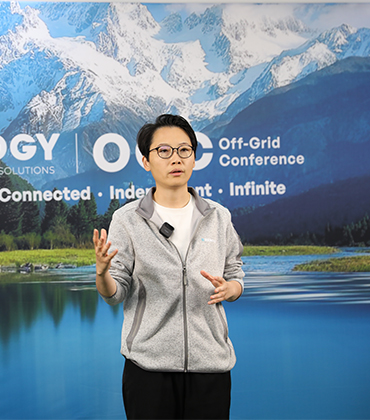
People today live in motion. Work is flexible, travel is fluid and communities are reshaping themselves beyond the limits of fixed infrastructure. Yet energy, the foundation of modern life, has not kept up with how we live. At the edges of the grid, reliable energy is still uneven. From families seeking independence on the road to communities building their first resilient power systems, these are the places where off-grid solutions can unlock real freedom. This is the world Renogy is helping transform. The company was founded on a simple belief: clean, dependable energy should be available to everyone. During her PhD research in renewable power systems, Dr. Yi Li, founder and CEO, discovered a critical gap in the market. Whether on a camping trip or in remote villages, the inability to access power limited experience, opportunity, and connection. Existing energy solutions were failing users not just technically, but because quality and efficiency were lost across a fragmented chain of manufacturers, integrators, distributors and dealers. A trip to Africa brought the challenge into sharp focus. She met communities living every day without electricity and saw how much possibility was lost in the dark. Energy access wasn’t just about convenience; it determined whether progress could happen at all. While this experience helped lay the foundation for Renogy, it was one of many research and field moments that shaped Dr. Li’s mission. From the beginning, the vision has been broader: integrated off-grid systems for RVs and other mobile platforms, homes, and remote communities worldwide, making energy independence simpler for everyone. “Our mission has always been to make renewable energy accessible to everyone, not just professionals or enthusiasts, but ordinary people who dream of energy freedom,” says Dr. Li. Renogy delivers that vision to life through three main product lines: mobile energy solutions, portable energy solutions, and home & residential energy solutions. Within this portfolio, Mobile Energy Solutions provide integrated systems for RVs, boats, and specialty vehicles, using modular components that fit compact spaces while maintaining dependable off-grid performance. For those who prefer simplicity, the company’s Portable Energy Solutions provide ready-to-use power stations that require no installation, offering immediate and reliable power for camping or emergencies. It was among the first to introduce this concept in 2015, years before portable power became a mainstream idea. At home, its Hybrid Energy Solutions combine solar generation, battery storage, and grid connection to create balanced systems that keep households powered with ease. .
Gas Turbine Generator Solution

Achieving carbon neutrality is a widely shared objective for everyone. But it is often misconstrued as an abrupt transition from fossil fuels to renewable sources. FlexEnergy Solutions charts a realistic path toward sustainability by reducing the environmental impact of fossil fuels rather than solely relying on green power. A significant issue identified by the company is the incomplete combustion inherent in traditional fossil fuel energy systems, leading to considerable emissions of greenhouse gases. To counteract this, FlexEnergy Solutions has developed an innovative solution: a compact gas turbine. This technology is designed to produce reliable, efficient, and clean energy from fossil fuels. When this gas turbine burns fuel gas, it draws in external air and merges it with the fuel, creating a pure combustion cycle. The process results in an exceptionally clean and highly efficient burning system, with nearly 100 percent combustion. The turbine achieves impressive reductions in emissions of pollutants such as nitrogen oxides (NOx), carbon dioxide (CO2), and volatile organic compounds (VOCs), reaching levels as low as four parts per million for each of these environmental contaminants. This achievement is in sharp contrast to equivalent technologies, like reciprocating engines, which exhibit over ten times higher emissions when burning the same fuel at a similar scale.
CXO INSIGHTS

Ahead of the Curve : Staying Relevant in a Changing Energy Landscape
Scott Bordenkircher, Director, Technology Innovation & Integration, Arizona Public Service

With the Right Rules, Energy Storage Can Take the Power Grid to the Next Level
Todd Hranicka, Director - Energy Services, Public Service Electric & Gas Company

Connecting the world one device at a time
Enoch Charles, Information Technology - Smart Grid Transport Manager, CenterPoint Energy

The Evolution and Integration of Renewable Energy
Jim Helvig, P.E., Vice President of Operations, Dashiell Corporation

Integrating Environmental Stewardship in Energy Businesses
Christy Clark, Director, Environmental Management and Safety, DTE Energy

Charting the Path to Hydrogen Economy for a Sustainable Tomorrow
Henry Hui, Corporate VP, H2 Strategy & Energy Infrastructure, Nikkiso Clean Energy & Industrial Gases

Compensated Fuels: Enabling Energy Transition W/O Breaking The Bank
Jonathan (J.W.) Hackett, Senior Director, Environmental Products, Global Partners LP


IN FOCUS

The Off-Grid Renaissance: Storage, Smart Systems, and the Future of Power
A shift from centralized utilities to decentralized, off-grid power systems is transforming energy independence into a strategic asset, driven by technological and economic advancements.
Integrated Energy Ecosystems in Solar-Powered Yachts
Modern solar yachts use advanced energy management systems, high-voltage DC microgrids, efficient LiFePO4 batteries, and regenerative propulsion to enable fully integrated, zero-emission, self-sustaining maritime transport.
EDITORIAL
Powering the Next Wave of Clean Marine Energy
The market for clean marine energy is soaring as yacht owners seek quiet operation, lower fuel use, and dependable power far from shore. Solar-powered yacht solution providers are leading the rise through advances that reshape how vessels gather and store energy. High-efficiency panels lift output on limited deck space. Lithium storage delivers lighter banks with steady discharge and long service life. Ultra-light flexible solar modules broaden installation options across curved surfaces. Regenerative charging systems capture energy from propulsion during favorable conditions to extend available power without added equipment weight.
Off-grid power solution design is growing at the same pace as crews look for true independence on open water. Hybrid propulsion blends electric and diesel for smoother handling with lower fuel demand. Smart power management systems balance energy across navigation gear and hotel loads to keep performance stable while supporting longer routes with greater confidence. Advanced inverter technology improves conversion efficiency during variable loads to keep energy use steady through changing weather. Remote monitoring tools now give crews and operators real-time oversight of battery health and system behavior for more reliable planning.
This edition of Energy Tech Review brings recent developments that define this shift and highlights the systems setting new standards for clean power on the water.
It features thought leadership articles from industry experts, including Leslie Myers, product manager renewables at Puget Sound Energy and Roderick Conwell, director transmission and distribution engineering at The AES Corporation, who share insights on current challenges, emerging practices and the technologies shaping the next phase of clean, reliable power on the water.
We hope this edition gives you a clearer view of the shifts taking place across marine energy and supports the decisions that shape your business as the demand for cleaner and more resilient power grows.
