
Be first to read the latest tech news, Industry Leader's Insights, and CIO interviews of medium and large enterprises exclusively from Energy Tech Review
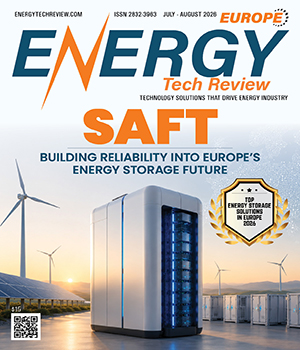
SAFT
Building Reliability into Europe's Energy Storage Future
Energy transitions have moved beyond constraints on generating renewable power alone. Across Europe, the central challenge is ensuring power systems remain stable, flexible and resilient as intermittent renewables account for a growing share of electricity supply. As a result, utilities, industrial operators and infrastructure providers are prioritising energy storage systems that can deliver consistent performance over long operational lifecycles. Saft has built its reputation around these demands. The company holds a significant position in the energy storage market by combining battery expertise with the ability to deploy large-scale solutions across a wide range of utility, industrial and critical infrastructure markets. It reflects a broader market reality where energy storage procurement is increasingly shaped by grid integration needs under rising renewable penetration, with a stronger focus on system reliability and lifecycle performance than battery technology alone. As electricity systems become more decentralised and renewable generation expands, the role of storage is evolving from a supporting technology to a core element of energy infrastructure. Delivering Integrated Energy Storage at Scale Saft develops and manufactures advanced battery systems for renewable integration, grid services, industrial operations, transportation, telecommunications and mission-critical infrastructure. Its energy storage activities are increasingly centred on large-scale lithium-ion battery energy storage systems (BESS). The company’s offering is not limited to cells and modules alone. It provides fully integrated storage solutions comprising battery technology, power conversion systems, controls and operational management to fully featured energy storage systems. This system-level approach supports functionalities including renewable integration, frequency regulation, energy shifting and grid resilience.
Hydrogen Energy
Atmonia
Decentralizing Ammonia Production with Renewable Energy
Dr. Helga Dögg Flosadóttir, CEO and Co-founder, Dr. Prof. Egill Skúlason, CSO and Co-founder
Atmonia is a pioneer in developing a direct aqueous nitrogen electrolyzer that produces ammonia in a single step without hydrogen intermediates. The deep-tech firm’s method is the world’s first electrochemical process for ammonia synthesis in aqueous electrolytes, to be powered entirely by intermittent renewable sources such as solar and wind power. “We have demonstrated the first-of-kind nitrogen electrolyzer with aqueous electrolyte, producing ammonia under ambient conditions. Our technology is the key to distributed ammonia production,” says Helga Dögg Flosadóttir, CEO and co-founder. Its proprietary anion exchange membrane (AEM) nitrogen electrolyzer produces ammonia from air and water within a single electrochemical cell under ambient temperature and pressure. Water is oxidized to produce oxygen and protons, while nitrogen is reduced and reacts with those protons to form ammonia. The system can deliver ammonia as aqueous salt solutions (ammonium sulfate or phosphate), aqua ammonia or liquid anhydrous ammonia. Bypassing conventional multi-step, fossil fuel-intensive processes makes Atmonia’s system highly energy-efficient and cost-effective. It shifts ammonia production towards modular, electricity-driven units deployable near the point of use, enabling local agriculture and decentralized energy systems. The Streamlining and Decentralization of Nitrogen Synthesis Unlike the legacy carbon-intensive Haber-Bosch process, which requires high temperatures and pressure, the AEM electrolyzer operates at ambient conditions. This allows the system to cycle on and off with minimal time or cost penalties. Life cycle assessments indicate potential CO₂ reductions of about 80 percent. The theoretical limit for Atmonia’s process is as low as 6 MWh/t, its near-term target is 40 MWh/tonne NH3 and a realizable objective upon full optimization is to achieve 12 MWh/t..

Energy Audit Services

Celtic Dynamics
Transforming a Business's Net-Zero Intentions into Real-World Results
Dylan Walsh, Director
Celtic Dynamics, an energy and technical engineering consultation and services company, is redefining how businesses should approach energy efficiency by making each step clear and manageable. From thorough energy audits to thoughtful design and grant support, it transforms sustainability from a lofty goal into an accessible journey. Businesses find guidance that extends to a clear, actionable plan for becoming more energy-efficient and cost-effective. With over 22 percent of Ireland’s energy audits under its belt, the company serves as a trusted advisor to businesses of all sizes, proving sustainability is achievable, from a local café to a multi-site corporation. “Our clients can mix and match the services they need,” explains director Dylan Walsh. “For some, that means we handle everything from design to installation. Others rely on us to perfect specific stages, like securing grants or refining their energy strategy.” This flexibility allows businesses of all sizes to stay in control and create a customised toolkit for their ideal energy-efficient solution. This level of personalised service makes Celtic Dynamics a trusted partner in various industries, from biomedical factories and nursing homes to university buildings, corporate offices and multinational corporations, showcasing its versatility and adaptability. Mapping the Journey between Energy Efficiency and Financial Savings Its seamless audit process is rooted in precise analysis and actionable insights, making energy management more accessible and informed. Guided by a dedicated central manager, the process provides the clarity, coordination and efficiency needed to navigate what might otherwise be a maze of complex tasks. The journey begins with a deep dive into the client’s operations, identifying hidden inefficiencies within equipment and processes. By uncovering patterns of energy waste that might otherwise go unnoticed, a comprehensive energy report is produced. It includes a custom roadmap to carbon neutrality, outlining various solutions, associated costs and recommended steps while highlighting grant opportunities best suited to the client’s goals. An accompanying timeline offers clients a clear pathway, showing key milestones, such as completing installations by 2028 and achieving full carbon neutrality by 2030, with ESG targets aligned by 2027. This long-term vision, paired with actionable steps, helps clients plan and allocate budgets with confidence and foresight. Celtic Dynamics also provides a thorough financial assessment, helping clients visualise the impact of their decisions. Its lifecycle assessment model contrasts environmental benefits with financial implications, offering transparent comparisons. For instance, rather than recommending a short-term $36,000 burner upgrade to temporarily reduce emissions, Celtic Dynamics might advise a strategic investment in future-ready infrastructure, such as $130,000 for heat pumps. Not only does this option provide a lasting solution, but it allows clients to capitalise on available grants, maximising long-term value. By mapping out these scenarios, clients can choose whether to invest in immediate, cost-effective upgrades or to prioritise long-term solutions for carbon neutrality by 2030. Transparency is embedded throughout the process. Clients receive monthly updates detailing milestones, upcoming phases and opportunities for input on critical decisions, ensuring they remain fully informed.
Predictive Battery Monitoring Solutions
Batteries power everything from electric vehicles to critical infrastructure, making their reliability non-negotiable. Yet managing battery systems remains a complex challenge, especially in dynamic or high-demand environments. BatteryCheck is addressing this head-on, transforming battery management from a reactive necessity into a strategic advantage. The company specialises in predictive battery monitoring and analytics, designed for manufacturers, service providers, and integrators who depend on batteries but may lack the internal expertise to manage them proactively. Offering deep, real-time insights into battery behaviour, BatteryCheck enables organisations to anticipate potential failures before they occur, ensuring consistent performance whether batteries are deployed as primary power sources or critical backups. Unlike traditional battery management systems, which primarily focus on monitoring charging cycles, cell balancing, safety, and immediate health metrics, BatteryCheck adopts a forward-looking approach. The platform aggregates telemetry data—such as voltage, current, temperature, and calculated performance metrics—through an API into its sophisticated analytics engine. After processing, it generates predictive alerts, actionable recommendations, and health forecasts, delivered seamlessly via API integration. Clients can access this intelligence through BatteryCheck’s intuitive dashboard, visualising individual battery analytics or integrating the data directly into their existing systems. In doing so, BatteryCheck empowers stakeholders to shift from reactive maintenance to proactive optimisation, ensuring batteries perform reliably and extending their operational life. Flexibility at the Core Building a truly versatile battery analytics platform required flexibility from the start. BatteryCheck’s solution is engineered to adapt across a broad spectrum of chemistries and applications, operating seamlessly whether a company relies on lithium-ion, lead-acid, or emerging battery technologies. Supporting both first-life applications, such as electric vehicles, and second-life use cases where repurposed batteries are used for energy storage, BatteryCheck delivers powerful insights through a single, intuitive interface. This flexibility extends beyond software. Recognising that not all batteries are equipped with sophisticated management systems, BatteryCheck offers a suite of third-party sensors capable of measuring current, voltage, temperature, and other key parameters. These sensors can be retrofitted onto legacy batteries and transmit real-time data via machine-to-machine (M2M) SIM cards directly to BatteryCheck’s backend, bridging critical gaps in battery fleets without costly infrastructure overhauls.

Bioenergy

Modernizing Instrumentation and Control Systems in the Digital Era
Tim Frost, Principal Project Engineer, Framatome
Energy Efficiency

Storage Technologies For Offshore Renewable energy
Olivier Lodeho, Technology Director, Subsea 7 [OTCMKTS: SUBCY]
Energy Solutions

Investment Is The Key To A Clean Energy Future
Leslie Myers, Product Manager, Renewables, Puget Sound Energy
Battery Storage Solutions

Delphy Underground Storage System: The Right Fit for Green Hydrogen Market Needs
Vincent Designolle, Director of Delphy Hydrogen Storage, Vallourec
Battery Tech
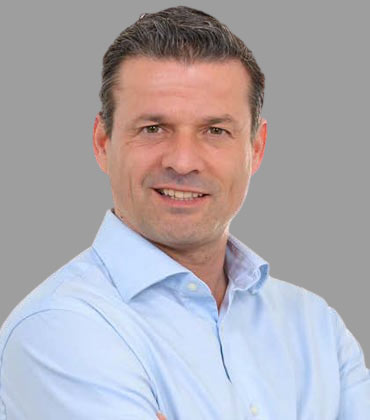
A New Government: How to Spend 100 Billion Euro
Dr. Arnt Baer, Head of Politics and Associations, GELSENWASSER AG
Hydrogen Energy

Rebalancing the UK's Decarbonisation Strategy
Marcos Matijasevich, Head of Low Carbon Transition, Essar Oil (UK) Limited
Energy Efficiency

How Technological Advancements Such As Big Data/ AI Etc. Can Enhance More Personalisation In Your Employer Branding Strategy?
Gabor Varjasi, Global Line Manager Advisory Senior Director for Gas & Low Carbon Energy and Functions, BP

IN MY OPINION
Energy AI
Innovation in Renewable Energy Asset Management
Robert Gomez, Head of Onshore Asset Management, Ørsted [CPH: ORSTED]
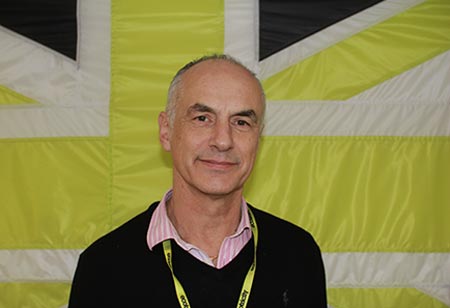
LAST WORD
Hydrogen Energy
Building VPPS: From Reactive Services to Strategic Foresight
Mark Meyrick, General Manager, Ecotricity Smart Grid Limited
IN FOCUS


Energy Audits in Europe: Unlocking Value and Sustainability
Energy audits are essential for improving safety, lowering expenses, and boosting property value.
EDITORIAL
Powering Europe’s Clean Energy Transition Through Scalable Energy Systems
Europe’s energy transition is entering a new phase shaped by system reliability, storage integration and the industrial scaling of clean technologies. As renewable adoption grows, attention is shifting beyond generation to how energy is stored, balanced and delivered across increasingly complex grids. In this edition of Energy Tech Review Europe, we spotlight the organisations and leaders helping drive that change.
At the centre of this issue, Saft is recognised as the Top Energy Storage Solutions in Europe 2026. The company is helping advance large-scale battery storage systems that support grid stability, renewable integration and industrial power needs. Its approach combines battery engineering with integrated systems that include power conversion, controls and lifecycle management. Platforms such as Intensium® provide flexibility across utility-scale and industrial applications, supporting the long-term resilience of Europe’s evolving energy landscape.
The organisations recognised in this edition show how innovation is influencing different parts of the energy ecosystem. Atmonia is recognised as the Top Nitrogen Electrolyser Technology in Europe 2026. The company is developing a single-step process that converts air and water directly into ammonia under ambient conditions. Its modular approach supports decentralised production and opens new possibilities for agriculture and renewable energy storage.
Leadership perspectives featured in this edition provide additional context. Robert Gomez, Head of Onshore Asset Management at Ørsted, discusses how continuous monitoring and analytics are changing the way wind, solar and storage assets are managed. Meanwhile, Mark Meyrick, General Manager Ecotricity Smart Grid Limited, Ecotricity examines the role of Virtual Power Plants in balancing renewable generation and improving grid flexibility through distributed energy resources.
The organisations and leaders featured in this issue reflect how energy storage, decentralised production models and intelligent grid systems are converging to define Europe’s next phase of energy infrastructure. We invite readers to explore the insights presented throughout this edition.
