



Energy transitions have moved beyond constraints on generating renewable power alone. Across Europe, the central challenge is ensuring power systems remain stable, flexible and resilient as intermittent renewables account for a growing share of electricity supply. As a result, utilities, industrial operators and infrastructure providers are prioritising energy storage systems that can deliver consistent performance over long operational lifecycles.
Saft has built its reputation around these demands. The company holds a significant position in the energy storage market by combining battery expertise with the ability to deploy large-scale solutions across a wide range of utility, industrial and critical infrastructure markets. It reflects a broader market reality where energy storage procurement is increasingly shaped by grid integration needs under rising renewable penetration, with a stronger focus on system reliability and lifecycle performance than battery technology alone. As electricity systems become more decentralised and renewable generation expands, the role of storage is evolving from a supporting technology to a core element of energy infrastructure.
Delivering Integrated Energy Storage at Scale
Saft develops and manufactures advanced battery systems for renewable integration, grid services, industrial operations, transportation, telecommunications and mission-critical infrastructure. Its energy storage activities are increasingly centred on large-scale lithium-ion battery energy storage systems (BESS).
 The company’s offering is not limited to cells and modules alone. It provides fully integrated storage solutions comprising battery technology, power conversion systems, controls and operational management to fully featured energy storage systems. This system-level approach supports functionalities including renewable integration, frequency regulation, energy shifting and grid resilience.
A key example is the Intensium® platform, developed for utility-scale and industrial storage needs. It supports flexible deployment across project sizes and durations, allowing systems to be configured for specific operational objectives. Recent developments in the Intensium Flex portfolio further expand this adaptability, supporting both shorter-duration grid balancing and longer-duration storage requirements.
The importance of this integrated method becomes greater with the increasing scale and complexity of storage projects. This architecture enables operators to simplify project implementation and align storage assets more effectively with evolving grid requirements.
Safety, Reliability and Lifecycle Value
As Europe’s energy storage market accelerates, customers are shifting their focus away from headline performance metrics and towards a more practical concern of long-term reliability. For utilities, industrial operators and infrastructure providers, the real measure of an energy storage system is how consistently it performs over years of operation.
The company has spent decades supporting mission-critical applications where even brief disruptions can have far-reaching consequences. That experience has shaped an approach centred on robust system design, high safety standards and long-term durability, helping customers build energy storage assets they can depend on for the long haul.
 Safety and lifecycle performance have become strategic priorities across the sector as storage systems scale and integrate more deeply with national grids. This shift is reinforced by regulatory and industry standards across Europe, which place increasing emphasis on operational safety and reliability in storage systems. As project developers and asset owners seek to maximise returns over longer operating periods, battery durability, predictive maintenance capabilities and lifecycle transparency are becoming essential factors in procurement decisions.
Saft addresses these requirements through engineered, monitored and managed systems designed to optimise performance across the full asset lifecycle. The company aims to maintain lower operational risk and improve the longevity of an asset.
A further advantage lies in organisational depth. From design and manufacturing to integration and service support, Saft maintains control over critical points in the value chain and offers customers a single-partner approach throughout the project lifecycle.
The convergence of power generation, storage and grid services across the energy sector allows this battery expertise, combined with energy system integration capabilities, to be applied to solutions tailored for the evolving needs of grids across Europe and beyond. Its integration within TotalEnergies further strengthens this capability by connecting battery expertise with wider experience in renewable generation, power markets and energy infrastructure development.
Translating Technology into Operational Impact
The true measure of an energy storage provider lies in how systems perform in real-world operating conditions rather than in technical specifications alone. . Across global markets, this shift is driving the adoption of utility scale storage systems designed for consistent performance and long term operational reliability. These systems must respond rapidly to changes in supply and demand while delivering reliable, consistent performance over the long term. In industrial environments, they also help maintain operational continuity, improve energy efficiency and reduce the risk and impact of power disruptions.
Saft’s products address these requirements across a range of use cases. Utility-scale systems contribute to frequency regulation, provide reserve power and help integrate renewables into the grid. Industrial systems support peak shaving, provide greater operational security and optimise energy use. Microgrids and isolated installations reduce dependence on conventional generation while enhancing reliability.
Grid and industrial deployments demonstrate that energy storage is moving from an additional service to an integral component of modern power infrastructure. The distributed nature of the grid and the rise in renewable penetration are driving demand for predictable, secure and long-lasting storage systems. This broad range of deployments enables Saft to apply operational insights gained across sectors to continuously refine system design and performance.
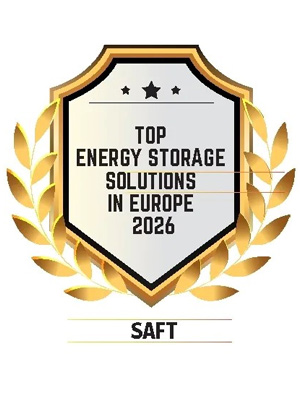
These applications are expanding as energy systems evolve under broader decarbonisation, electrification and grid modernisation efforts, particularly in Europe. The ongoing emphasis of the European Union on energy security and grid resilience further drives demand for storage systems to enable a more decentralized, flexible energy grid. The growth is simultaneously widening opportunity and enhancing the expectations for long-term value and operational excellence. Saft’s recognition as the Top Energy Storage Solutions in Europe 2026 reflects its sustained technological leadership and its ability to translate battery innovation into dependable operational outcomes.
Saft has built its reputation around these demands. The company holds a significant position in the energy storage market by combining battery expertise with the ability to deploy large-scale solutions across a wide range of utility, industrial and critical infrastructure markets. It reflects a broader market reality where energy storage procurement is increasingly shaped by grid integration needs under rising renewable penetration, with a stronger focus on system reliability and lifecycle performance than battery technology alone. As electricity systems become more decentralised and renewable generation expands, the role of storage is evolving from a supporting technology to a core element of energy infrastructure.
Delivering Integrated Energy Storage at Scale
Saft develops and manufactures advanced battery systems for renewable integration, grid services, industrial operations, transportation, telecommunications and mission-critical infrastructure. Its energy storage activities are increasingly centred on large-scale lithium-ion battery energy storage systems (BESS).
The company’s offering is not limited to cells and modules alone. It provides fully integrated storage solutions comprising battery technology, power conversion systems, controls and operational management to fully featured energy storage systems. This system-level approach supports functionalities including renewable integration, frequency regulation, energy shifting and grid resilience.A key example is the Intensium® platform, developed for utility-scale and industrial storage needs. It supports flexible deployment across project sizes and durations, allowing systems to be configured for specific operational objectives. Recent developments in the Intensium Flex portfolio further expand this adaptability, supporting both shorter-duration grid balancing and longer-duration storage requirements.
The importance of this integrated method becomes greater with the increasing scale and complexity of storage projects. This architecture enables operators to simplify project implementation and align storage assets more effectively with evolving grid requirements.
Safety, Reliability and Lifecycle Value
As Europe’s energy storage market accelerates, customers are shifting their focus away from headline performance metrics and towards a more practical concern of long-term reliability. For utilities, industrial operators and infrastructure providers, the real measure of an energy storage system is how consistently it performs over years of operation.
The company has spent decades supporting mission-critical applications where even brief disruptions can have far-reaching consequences. That experience has shaped an approach centred on robust system design, high safety standards and long-term durability, helping customers build energy storage assets they can depend on for the long haul.
Safety and lifecycle performance have become strategic priorities across the sector as storage systems scale and integrate more deeply with national grids. This shift is reinforced by regulatory and industry standards across Europe, which place increasing emphasis on operational safety and reliability in storage systems. As project developers and asset owners seek to maximise returns over longer operating periods, battery durability, predictive maintenance capabilities and lifecycle transparency are becoming essential factors in procurement decisions. Saft addresses these requirements through engineered, monitored and managed systems designed to optimise performance across the full asset lifecycle. The company aims to maintain lower operational risk and improve the longevity of an asset.
A further advantage lies in organisational depth. From design and manufacturing to integration and service support, Saft maintains control over critical points in the value chain and offers customers a single-partner approach throughout the project lifecycle.
The convergence of power generation, storage and grid services across the energy sector allows this battery expertise, combined with energy system integration capabilities, to be applied to solutions tailored for the evolving needs of grids across Europe and beyond. Its integration within TotalEnergies further strengthens this capability by connecting battery expertise with wider experience in renewable generation, power markets and energy infrastructure development.
Translating Technology into Operational Impact
The true measure of an energy storage provider lies in how systems perform in real-world operating conditions rather than in technical specifications alone. . Across global markets, this shift is driving the adoption of utility scale storage systems designed for consistent performance and long term operational reliability. These systems must respond rapidly to changes in supply and demand while delivering reliable, consistent performance over the long term. In industrial environments, they also help maintain operational continuity, improve energy efficiency and reduce the risk and impact of power disruptions.
Saft’s products address these requirements across a range of use cases. Utility-scale systems contribute to frequency regulation, provide reserve power and help integrate renewables into the grid. Industrial systems support peak shaving, provide greater operational security and optimise energy use. Microgrids and isolated installations reduce dependence on conventional generation while enhancing reliability.
Grid and industrial deployments demonstrate that energy storage is moving from an additional service to an integral component of modern power infrastructure. The distributed nature of the grid and the rise in renewable penetration are driving demand for predictable, secure and long-lasting storage systems. This broad range of deployments enables Saft to apply operational insights gained across sectors to continuously refine system design and performance.
These applications are expanding as energy systems evolve under broader decarbonisation, electrification and grid modernisation efforts, particularly in Europe. The ongoing emphasis of the European Union on energy security and grid resilience further drives demand for storage systems to enable a more decentralized, flexible energy grid. The growth is simultaneously widening opportunity and enhancing the expectations for long-term value and operational excellence. Saft’s recognition as the Top Energy Storage Solutions in Europe 2026 reflects its sustained technological leadership and its ability to translate battery innovation into dependable operational outcomes.
