

Be first to read the latest tech news, Industry Leader's Insights, and CIO interviews of medium and large enterprises exclusively from Energy Tech Review
QiOn Tech
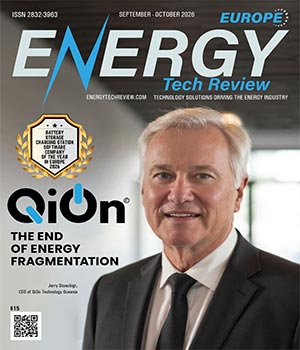
The End of Energy Fragmentation
As organizations invest in battery storage systems, EV charging networks, energy management solutions, renewable energy generation, and electrified operations, they are under growing pressure to extract greater operational value from every unit of energy they consume. For grid operators, fleet depots, industrial facilities, marine ports, logistics hubs, mining sites and other energy-intensive environments, success is no longer determined simply by how much power is available. It depends on how intelligently that power is sourced, balanced, planned, distributed, and utilized across the entire operation. To that end, the first logical point is the source. Energy may come from multiple sources, including the grid, solar generation, wind power, and battery storage systems. Next comes the application of this energy, with growing numbers of assets competing for it, from industrial machines, EV charging infrastructure or HVAC systems to mining equipment and facility operations. Balancing these intensive demands while controlling costs, maintaining uptime, and supporting growth has become a significant operational challenge. Organizations that manage energy most effectively can reduce operating costs, improve asset utilization, increase infrastructure availability, and even unlock new revenue opportunities through energy storage and grid participation programs. This is where QiOn Technology creates value. QiOn helps organizations optimize how energy is generated, stored, distributed, and consumed across their operations. By combining proprietary technologies as energy management, battery storage intelligence, renewable energy integration, and EV charging orchestration into a single platform, the company enables operators to deploy and scale electrified infrastructure more efficiently while maximizing the value of every available kilowatt.
AI Powered Hybrid Energy Systems
The global shift to green hydrogen presents a transformative opportunity for shaping a decarbonized economy. CibusCell is an enabler of that leap, acting as the digital brain of a green hydrogen plant. The AI-native, cloud-based platform equips industrial users, energy developers and infrastructure operators with real-time insights and centralized control, enabling smarter decisions and more efficient management at every stage of production. By embedding AI at its core, it anticipates uncertainties and optimizes production, storage, distribution and resources to help operators lower costs and maximize performance. “We give stakeholders a single, intelligent platform to manage the entire hydrogen project lifecycle,” says Marcus Ruebsam, co-founder. CibusCell guides the journey, starting with investment planning, continuing through real-time operational control and extending to future scenario modeling for long-term performance. Developers, investors, regulators and partners can collaborate seamlessly on the platform, ensuring decisions are data-driven and aligned with operational and financial goals. Building the platform on Microsoft Azure assures the reliability and scalability clients need for efficient hydrogen production management. Fragmented systems are eliminated, creating a unified environment where intelligence continuously drives efficiency. Clients have already reported cost reductions of up to 40 percent, demonstrating CibusCell’s effectiveness in maximizing efficiency and minimizing costs. Optimizing Hydrogen Projects from Day One CibusCell’s client engagement model is designed to support hydrogen projects well before plant construction begins. During the investment planning stage, it helps clients design the most effective and cost-efficient setup for their production goals. This early-stage planning doesn't require a working plant. Everything is simulated within the platform to explore multiple scenarios. Factored in are CapEx, OpEx and lifecycle costs, along with key variables such as access to green electricity, regulatory considerations, expected hydrogen demand and offtake commitments. Data is used to calculate the optimal layout for renewable energy sourcing, and the size and configuration of core components like electrolyzers, storage tanks and trailer distribution. The ability to model and optimize before building prevents overinvestment, underutilization and poor asset sizing. Once the plant design is finalized and investment decisions are made, CibusCell focuses on operational optimization. It connects to the entire hydrogen infrastructure in real time, using IoT integration to gather data from electrolyzers, storage tanks, transport trailers and end-use applications like industrial burners and mobility fleets. The platform continuously analyzes sensor data, weather forecasts, and electricity market prices to simulate and update optimal production schedules. At the core of this phase is the ability to optimize hydrogen production hour by hour and day by day, always targeting the lowest possible cost per kilogram. Whether electricity is procured from the spot market or self-generated from renewables, CibusCell uses machine learning and time-series forecasting to balance supply, demand, storage levels and technical constraints. Complete automation is one of its core capabilities, and a key differentiator. Once the client defines cost thresholds and operational preferences, the platform autonomously manages the entire hydrogen production process 24/7. This includes starting and stopping electrolyzers, controlling storage systems, buying or withholding electricity from the market and adjusting production schedules based on real-time data. The automation is not just rule-based. It’s driven by optimization algorithms and machine learning models that constantly evaluate cost, efficiency, hardware performance and market dynamics. This shift from manual, spreadsheet-driven planning to automated, AI-driven optimization helps clients adapt to dynamic conditions without guesswork.

High Power Hydrogen Fuel Cell Solutions

As industries transition away from diesel, the race intensifies to find a power source that can deliver both strength and reliability for modern demanding operations. French pioneer INOCEL is rising to this challenge, positioning itself as a comprehensive hydrogen solutions provider, poised to revolutionize stationary power generation, shipping, and heavy transport applications. “Our goal is to make hydrogen a reliable, everyday energy solution for operators, without compromising performance or efficiency,” says Jules Billiet, CEO, Hydrogen Fuel Cell Solutions at INOCEL. INOCEL combines cutting-edge technology, operational expertise, and infrastructure support in a unified ecosystem. This integrated approach guides customers through every stage of the hydrogen transition, from planning & financial optimization to project execution and long-term services. By eliminating common barriers to adoption, INOCEL helps operators meet emissions regulations, reduce risk, and scale solutions to address both current and future energy demands. Practical Solutions for Real-World Challenges INOCEL leverages its full-value-chain expertise to deliver turnkey, sector-specific hydrogen solutions that make adoption practical across stationary power generation, shipping, and heavy transport. Customers benefit from complete, fully decarbonized modular and scalable systems, from 300 kVA to several megawatts, engineered for day-one operation. The company offers specialized solutions tailored to industry needs. Driven by strong market growth expectations fueled by the increasing demand for electrification and decarbonization incentives, the stationary and mobile power markets are projected to experience rapid expansion. INOCEL solutions address several power generation needs: 1. The GEN-Z portfolio starting at 300 kVA is an ideal all-in-one containerized solution for mobile or remote applications such as construction sites, events, and similar locations, where a few hundred kilowatt of power are required in a modular, containerized format. 2. Large Infrastructure: The same system is scalable up to tens of megawatts through modular, plug-and-play integration of multiple fuel cell units. This scalability allows flexible power deployment for energy-intensive sites currently lacking reliable grid access such as ports, data centers and the integration of smart grid services.
Battery Storage Solutions

H2-Solution for the Heating Market?
Dr. Arnt Baer, Head of Policy and Associations, GELSENWASSER AG
Energy Efficiency

With the Right Rules, Energy Storage Can Take the Power Grid to the Next Level
Todd Hranicka, Director – Solar Energy, EV & ES, Public Service Electric & Gas Company
Battery Storage Solutions

Energy Transition in the Developing World and the Role of Power Distribution Grids
Gino Celentano, Head of Infrastructure and Networks Brazil, Enel Brasil
Battery Tech
Scaling up in the Energy Sector: Challenges and Opportunities Ahead
Mark Schaefer, Senior Program Manager Digitalization, Siemens Energy
Hydrogen Energy

Rethinking GDPR Sustenance
Christos Syngelakis, Group Chief Information Security Officer (CISO) and Data Protection Officer (DPO), Motor Oil

IN MY OPINION
Pipeline Management
Inclusion of Oil Refining Products in the Upcoming UKs CBAM: A Strategic Imperative
Marcos Matijasevich, Head of Low Carbon Transition, Essar Oil (UK) Limited

LAST WORD
Battery Tech
Telecom Future State: Connecting a Smarter, Faster and More Human-Centric World
Enoch Charles, Information Technology - Smart Grid Transport Manager, CenterPoint Energy [NYSE: CNP]
IN FOCUS
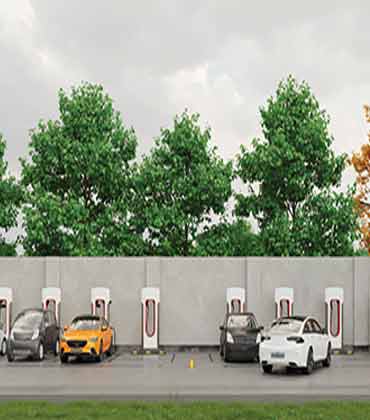
Energising Europe: The Rise of Intelligent Battery Storage Systems for EV Charging
Battery storage charging station software companies optimise EV charging networks through energy management, smart scheduling, grid integration, and real-time infrastructure monitoring.

EDITORIAL
Bringing Greater Intelligence to the Energy Transition
Energy systems are getting more complicated. Batteries, renewable power and electric vehicles are becoming part of everyday operations, leaving businesses to figure out not only where their energy comes from but how to use it well. Energy Tech Review Europe looks at the companies and leaders working through these changes.
Leading the edition is QiOn, recognised as the Battery Storage Charging Station Software Company of the Year in Europe 2026. Its platform brings energy management, battery storage and EV charging together, giving operators a clearer picture of what is happening across their sites. By combining cloud, edge and local controls, QiOn also helps keep systems running when connectivity is interrupted. The company reports a 35 per cent reduction in operational incidents, a 43 per cent increase in integrated BESS and charging availability and a 22 per cent reduction in energy consumption across industrial facility operations.
The edition also features Marcos Matijasevich, Head of Low Carbon Transition at Essar Energy Transition Fuels, who looks at the UK’s proposed carbon border adjustment mechanism and makes the case for including oil refining products in its initial scope. His perspective considers carbon leakage alongside the role of domestic refining in energy security and decarbonisation.
Enoch Charles, Information Technology - Smart Grid Transport Manager at CenterPoint Energy, takes a broader view of what comes next. His perspective explores AI, edge computing, cybersecurity and more connected networks, while also considering the need to keep people at the centre of these changes.
Together, these perspectives reflect an energy sector working through change from several directions. We invite you to explore the edition and discover the technologies and ideas shaping a more connected and adaptable energy future.
