




 Bryan Parks, CEO/Chairman
Solentrex addresses this operational disconnect by bringing the entire lead-to-activation workflow into one automated platform. With verified utility data and AI-driven savings analysis built into the workflow, installers can qualify projects sooner, anchor proposals in actual consumption patterns and limit downstream corrections. The platform reduces a conventional, confusing multi-step process to three automated steps completed in a few minutes.
“Our goal is to make every project dependable before it reaches the customer,” says Bryan Parks, chairman and COO. “When consumption data, economics and design logic are aligned early, installers can increase sales and advance projects with greater certainty.”
Accelerating Sales and Project Approval
Parks’ decision to build Solentrex came from firsthand frustration with residential solar. After two poor installation experiences at his own home, he traced the problems to inaccurate data, unreliable savings projections and software that could not support the full project lifecycle. Solentrex was designed to address those limitations.
Solentrex begins with verified utility interval data from electronic meters. It analyzes electricity consumption in 15-minute intervals, then combines that information with title details, home characteristics and more than 90 property-related data points. AI is then applied across more than 900 variables to evaluate solar and storage design. This proprietary technology gives sales teams the ability to create a detailed, accurate energy-savings proposal before knocking on a homeowner’s door.
This foundation makes the proposal stage disciplined. If the projected economics don’t support meaningful savings, the system won’t let the numbers be adjusted just to close a sale. Homeowners receive savings projections grounded in actual consumption patterns, while installers and finance providers can move forward knowing the proposal reflects verified project economics.
-
Our goal is to make every project dependable before it reaches the customer. When consumption data, economics and design logic are aligned early, installers can close more sales and advance projects with greater certainty.
Improving System Accuracy
The same data discipline continues once the project moves into design. Many design platforms require a full remodel when a variable changes, slowing the process and increasing inconsistency. Solentrex’s core calculations run once, allowing users to adjust a design and see how the change affects production and financial performance.
That flexibility is particularly valuable when configuring solar-plus-storage systems. Battery sizing and storage strategy directly influence project economics and homeowner savings. Solentrex evaluates how storage should be paired with the system so stored energy can be used during high-rate utility periods instead of expensive grid electricity after peak solar production hours.
Reducing Change-Order Risk
By connecting proposal data and design logic from the start, Solentrex heads off the operational problems that usually surface later. For EPCs, the costliest issues often appear after the customer has signed and the team has to execute the project.
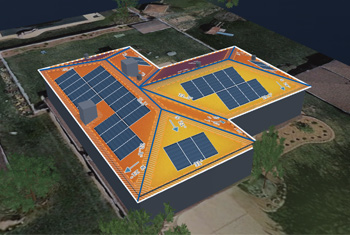 Solentrex brings those risks forward before installation planning begins. Rather than checking a deal after the fact, Solentrex won’t let a flawed one through. The platform is built so a project can only advance once it’s structured to avoid change orders. If a user inputs something that would trigger one, the system stops them with a real-time alert and shows them exactly what to correct before they can proceed. While assumption-related corrections often affect 30 to 40 percent of solar projects, Solentrex is designed to bring that figure down to 5 percent. One customer reduced its change-order rate from 42 percent to 10 percent after adopting the platform.
Strengthening EPC Profitability
Reducing late-stage corrections also strengthens the business case for EPCs. Less rework means fewer hours spent reconciling disconnected systems, rebuilding documents or correcting avoidable project assumptions.
Because the platform is built on proprietary technology, not licensed third-party design engines, Solentrex replaces 4 separate subscriptions — proposal software, design engine, document signing and more — with one flat fee, cutting software costs by roughly $15.00 per project / 40 percent versus leading platforms. Its flat-fee model also replaces multiple subscription layers, helping EPCs reduce operational overhead as well as software expense.
Solentrex plans to add deeper financial tools, leads management, LIDAR, analytics, CAD capabilities and additional integrations over the next year. With AI-driven design intelligence and embedded project controls, it keeps becoming a tool sales teams can run their whole day on, from first lead to signed deal.
