
Be first to read the latest tech news, Industry Leader's Insights, and CIO interviews of medium and large enterprises exclusively from Energy Tech Review
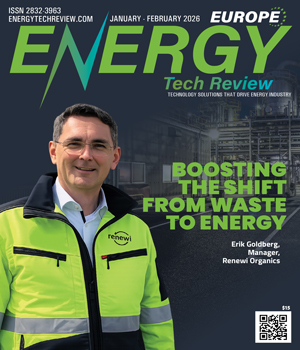
ur world is now only 8.6 percent circular. Of all the minerals, fossil fuels, metals, and biomass, just 8.6 percent are cycled back. This has fallen from 9.1 percent in the two years since the Circularity Gap Report was first launched in 2018. By now, I think most people know that clean paper should be sorted in a recycling bin instead of a trash can. Apples cores and leftovers, also known as organic waste, however—that’s a different story. Organics can be harmful to the environment when incinerated or landfilled. Disposing of organic waste the right way is environmentally responsible. But what can be done with organic waste when disposed of correctly? Transitioning from Waste to Energy Renewi Organics processes over 65,000 tonnes of organic waste streams into new raw materials on an annual basis. Organic waste is collected from restaurants, the retail sector, and the food processing industry. Their plant in Amsterdam, the Netherlands receives and processes over-date products—products not sold before the sell-by date. During the fermentation process, bio-gas is produced, part of which is transformed into electricity and supplied back to the Amsterdam electricity network. This supplies over 15,000 households with electricity and heat.
Comprehensive Energy Audit Services
Celtic Dynamics, an energy and technical engineering consultation and services company, is redefining how businesses should approach energy efficiency by making each step clear and manageable. From thorough energy audits to thoughtful design and grant support, it transforms sustainability from a lofty goal into an accessible journey. Businesses find guidance that extends to a clear, actionable plan for becoming more energy-efficient and cost-effective. With over 22 percent of Ireland’s energy audits under its belt, the company serves as a trusted advisor to businesses of all sizes, proving sustainability is achievable, from a local café to a multi-site corporation. “Our clients can mix and match the services they need,” explains director Dylan Walsh. “For some, that means we handle everything from design to installation. Others rely on us to perfect specific stages, like securing grants or refining their energy strategy.” This flexibility allows businesses of all sizes to stay in control and create a customised toolkit for their ideal energy-efficient solution. This level of personalised service makes Celtic Dynamics a trusted partner in various industries, from biomedical factories and nursing homes to university buildings, corporate offices and multinational corporations, showcasing its versatility and adaptability. Mapping the Journey between Energy Efficiency and Financial Savings Its seamless audit process is rooted in precise analysis and actionable insights, making energy management more accessible and informed. Guided by a dedicated central manager, the process provides the clarity, coordination and efficiency needed to navigate what might otherwise be a maze of complex tasks. The journey begins with a deep dive into the client’s operations, identifying hidden inefficiencies within equipment and processes. By uncovering patterns of energy waste that might otherwise go unnoticed, a comprehensive energy report is produced. It includes a custom roadmap to carbon neutrality, outlining various solutions, associated costs and recommended steps while highlighting grant opportunities best suited to the client’s goals. An accompanying timeline offers clients a clear pathway, showing key milestones, such as completing installations by 2028 and achieving full carbon neutrality by 2030, with ESG targets aligned by 2027. This long-term vision, paired with actionable steps, helps clients plan and allocate budgets with confidence and foresight. Celtic Dynamics also provides a thorough financial assessment, helping clients visualise the impact of their decisions. Its lifecycle assessment model contrasts environmental benefits with financial implications, offering transparent comparisons. For instance, rather than recommending a short-term $36,000 burner upgrade to temporarily reduce emissions, Celtic Dynamics might advise a strategic investment in future-ready infrastructure, such as $130,000 for heat pumps. Not only does this option provide a lasting solution, but it allows clients to capitalise on available grants, maximising long-term value. By mapping out these scenarios, clients can choose whether to invest in immediate, cost-effective upgrades or to prioritise long-term solutions for carbon neutrality by 2030. Transparency is embedded throughout the process. Clients receive monthly updates detailing milestones, upcoming phases and opportunities for input on critical decisions, ensuring they remain fully informed.

Predictive Battery Management System

Batteries power everything from electric vehicles to critical infrastructure, making their reliability non-negotiable. Yet managing battery systems remains a complex challenge, especially in dynamic or high-demand environments. BatteryCheck is addressing this head-on, transforming battery management from a reactive necessity into a strategic advantage. The company specialises in predictive battery monitoring and analytics, designed for manufacturers, service providers, and integrators who depend on batteries but may lack the internal expertise to manage them proactively. Offering deep, real-time insights into battery behaviour, BatteryCheck enables organisations to anticipate potential failures before they occur, ensuring consistent performance whether batteries are deployed as primary power sources or critical backups. Unlike traditional battery management systems, which primarily focus on monitoring charging cycles, cell balancing, safety, and immediate health metrics, BatteryCheck adopts a forward-looking approach. The platform aggregates telemetry data—such as voltage, current, temperature, and calculated performance metrics—through an API into its sophisticated analytics engine. After processing, it generates predictive alerts, actionable recommendations, and health forecasts, delivered seamlessly via API integration. Clients can access this intelligence through BatteryCheck’s intuitive dashboard, visualising individual battery analytics or integrating the data directly into their existing systems. In doing so, BatteryCheck empowers stakeholders to shift from reactive maintenance to proactive optimisation, ensuring batteries perform reliably and extending their operational life. Flexibility at the Core Building a truly versatile battery analytics platform required flexibility from the start. BatteryCheck’s solution is engineered to adapt across a broad spectrum of chemistries and applications, operating seamlessly whether a company relies on lithium-ion, lead-acid, or emerging battery technologies. Supporting both first-life applications, such as electric vehicles, and second-life use cases where repurposed batteries are used for energy storage, BatteryCheck delivers powerful insights through a single, intuitive interface. This flexibility extends beyond software. Recognising that not all batteries are equipped with sophisticated management systems, BatteryCheck offers a suite of third-party sensors capable of measuring current, voltage, temperature, and other key parameters. These sensors can be retrofitted onto legacy batteries and transmit real-time data via machine-to-machine (M2M) SIM cards directly to BatteryCheck’s backend, bridging critical gaps in battery fleets without costly infrastructure overhauls.
Advanced Electricity Algorithmic Trading Platform
As global demand for clean power surges, renewable asset owners—from wind farm operators to solar developers— are facing a critical question: How can fluctuating, weather-dependent generation be translated into stable, predictable revenue streams? To address this challenge, the renewable energy sector is undergoing a strategic shift—from a pure production mindset to one centered on revenue optimization. This evolution involves integrating technology, data, and financial instruments to ensure that every kilowatt-hour aligns with market opportunities. SAMAWATT stands as a trusted ally to make that shift actionable. Founded in 2018 and headquartered in Switzerland, SAMAWATT has emerged as a high-performing enabler of the Renewable Energy Trading-as-a-Service (RETaaS) model. As subsidies decline and competition intensifies, SAMAWATT provides asset operators with the tools and insights needed to transform volatility into value At the heart of SAMAWATT’s value proposition lies its flagship platform, SAMA-Asset™—a cloud-native, AI-driven system that redefines how wind, solar, and hybrid assets participate in European and global electricity markets. Designed to optimize forecasting, dispatch, and real-time market bidding, the platform routinely delivers 20 to 50 percent gains in net trading profits for clients. It connects directly to SCADA systems, weather data, and market exchanges, using high-frequency data and stochastic programming to optimize trades across day-ahead, intraday, balancing, and ancillary markets. Built for speed and scale, the SAMA-AssetTM platform eliminates the lengthy onboarding and capital investment cycles associated with legacy systems. Asset owners can begin seeing results within weeks, making it an ideal solution for utilities, developers, and virtual power plant (VPP) operators alike. After going live, each client is assigned a dedicated success engineer and has access to 24/7 support. Weekly performance reviews are conducted during the first months, ensuring complete knowledge transfer and allowing for early correction of any anomalies. SAMAWATT’s technological ecosystem extends beyond SAMA-Asset™. Its proprietary suite of algorithmic trading blueprints, SAMA-Strategies™, is explicitly built for renewable portfolios navigating wholesale power markets. This system is currently operational across 15 European countries and has been instrumental in supporting zero-imbalance, volume-shifting, and multi-market optimization arbitrage strategies. It has enabled clients to dynamically manage exposures and seize short-term pricing opportunities— unlocking new value streams that were previously out of reach. Furthermore, its specialized module for battery storage, SAMA-BATT™, employs a hybrid model that integrates digital twins of each battery system with market-based reinforcement learning. This approach optimizes charge-discharge cycles across revenue streams—from day-ahead arbitrage to frequency regulation—while minimizing battery degradation. The result is a 30 percent increase in battery-based income for clients.

CXO INSIGHTS
Resolving Sustainability Challenges in UK Data Centres
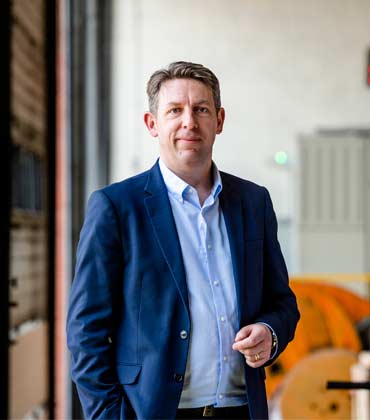
Antony White, Client Delivery Manager - Central Delivery Team, UK Power Networks Services

Leading Innovation in Renewable Energy
Alexander Vogt, Head of Metering Services, LichtBlick SE

The Chicken and the Egg Problem
Dr Tryggvi Thor Herbertsson, Chairman of Qair Iceland H2 and the Head of Hydrogen Strategy and Partnership of the Qair Group

Delphy Underground Storage System: The Right Fit for Green Hydrogen Market Needs
Vincent Designolle, Director of Delphy Hydrogen Storage, Vallourec
A New Government: How to Spend 100 Billion Euro
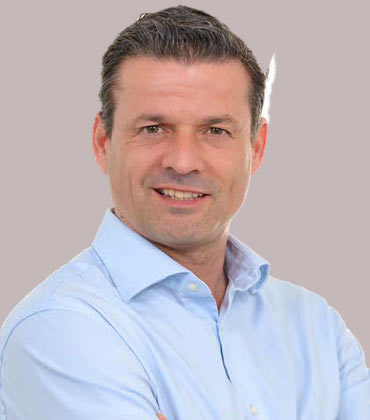
Dr. Arnt Baer, Head of Politics and Associations, GELSENWASSER AG

Rebalancing the UK's Decarbonisation Strategy
Marcos Matijasevich, Head of Low Carbon Transition, Essar Oil (UK) Limited

Building VPPS: From Reactive Services to Strategic Foresight
Mark Meyrick, General Manager, Ecotricity Smart Grid Limited

IN FOCUS

Enhancing Governance and Competitiveness: The Role of Energy Audits in Europe
Energy audits help European businesses strengthen governance, investor trust, and operational resilience while supporting compliance, competitiveness, and long-term strategic credibility.

Driving Europe Forward: Accelerating Clean Energy Adoption with Advanced Batteries
Advancements in battery technology enhance energy storage, safety, and supply chains, driving clean energy adoption and sustainability through innovation, collaboration, and next-generation solutions like SSE and sodium-based batteries.
EDITORIAL
Advancing Energy Intelligence Across Auditing, Storage, and Trading in Europe
The accelerating complexity of the energy landscape is pushing organizations to adopt more precise, data driven approaches across auditing, storage, and electricity markets. This edition of Energy Tech Review examines how comprehensive energy audit services, predictive battery management systems, and advanced electricity algorithmic trading platforms are shaping operational resilience and long term efficiency across Europe’s energy ecosystem.
At the center of this issue is BatteryCheck, recognized as the Predictive Battery Management System of the Year in Europe 2025. The company’s platform addresses a critical industry need by enabling predictive insights into battery performance, reliability, and lifecycle optimization. BatteryCheck’s achievement reflects its ability to translate complex battery data into actionable intelligence, supporting safer operations, improved asset utilization, and informed decision making for energy intensive industries navigating electrification and storage scale up.
Alongside the cover story, Celtic Dynamics, awarded Energy Auditing Company of the Year in Europe 2025, demonstrates the growing importance of comprehensive energy audits in driving measurable efficiency gains. By delivering structured, end to end audit services, the company enables organizations to identify inefficiencies, optimize consumption, and align operational practices with regulatory and sustainability expectations. Its recognition underscores the role of rigorous energy auditing as a foundational element of modern energy management strategies.
Also featured is SAMAWATT, named Renewable Energy Trading as a Service Company of the Year in Europe 2025. The company’s algorithmic trading platform reflects a shift toward service based models that simplify participation in increasingly dynamic electricity markets. By enabling advanced trading capabilities as a service, SAMAWATT supports renewable energy producers and consumers seeking greater flexibility, transparency, and market responsiveness.
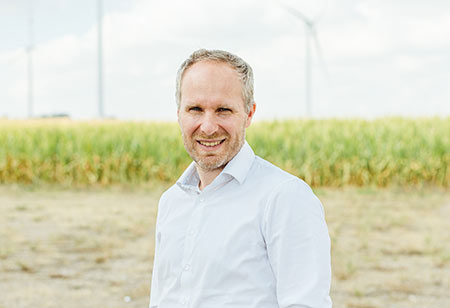
Complementing these perspectives are insights from industry contributors Erik Goldberg of Renewi Organics, Stanislav Cetkovsky of ČEZ, and Thomas Benjamin Tackie of Vestas, who bring operational and strategic viewpoints from across the renewable value chain.
Together, this issue highlights how disciplined innovation, technical rigor, and sector leadership are defining the next phase of Europe’s energy transition. Readers are encouraged to explore the featured articles for a deeper understanding of the systems and strategies shaping the future of energy.

