
Be first to read the latest tech news, Industry Leader's Insights, and CIO interviews of medium and large enterprises exclusively from Energy Tech Review
A featured contribution from Leadership Perspectives, a curated forum for energy technology leaders nominated by our subscribers and vetted by the Energy Tech Review Editorial Board.

Strata Clean Energy
Engineering the Future of Clean Energy
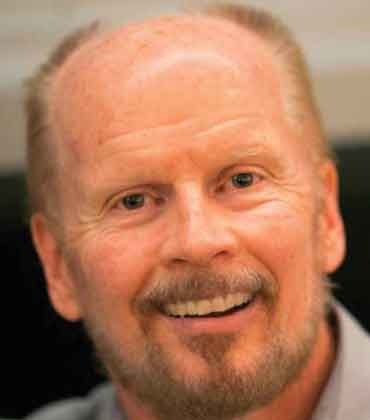
Jeff Lowe
Jeff Lowe is a seasoned engineering leader with over 30 years of experience in instrumentation, control systems, electrical engineering, and industrial design. He specializes in project leadership, technical problem solving, business development, and mentoring, with expertise across energy, power, nuclear and industrial sectors.
From Controls to Broader Engineering Expertise
My first job within the industry was with a control systems vendor. I knew that life didn’t begin and end with the vendor’s systems, so I branched out with EPC (Engineering-Procurement-Construction) firms and end users, and in many energy-related fields including cogeneration, nuclear, gas compression, and finally solar / BESS, over my 34-year engineering career. I have worked in over 20 countries worldwide.
My perspective has really changed from a very narrow, specific experience with systems I was responsible for, to a much broader scope of analysis, responsibility, and study. When I started in the mid-1980s, training and familiarization depended a lot on reading manuals, talking with others, and what you found by doing, since there was no internet. While I have embraced the internet heavily, sometimes I have found you need to rely on skills you haven’t used for years, especially when dealing with obsolete equipment in doing upgrades and migrations.
Over the years, and especially when I moved from control systems to then include instrumentation (when I moved to Alaska), it really impressed upon me to learn as much as I could about as many fields and technologies as possible. That way, whenever I wanted to find other jobs, or to “be the expert”, I could, which meant I was always sought after to provide input and to do additional work – which meant promotions and bonuses. So, over the years, I’ve learned about things I never expected, including lighting design, fire detection and annunciation, area classifications and electrical design, and lots of other areas. It very much struck me in my last job (working with a mid-size oil refinery) that I had so many questions about so many diverse subjects and technologies and was able to cover most everything – which was well appreciated by fellow employees and third parties alike.
On the technology front, I have seen that methods have become more streamlined. Over the years, companies have gone from developing their own systems and technologies to branching out and using third parties. It is rare that companies will try to do many things and instead concentrate on one or two things they do best. That shouldn’t be the case for engineers; the more diverse you can be, the more valuable you are.
Addressing Operational Challenges in Renewable Energy Growth
PV and BESS systems are gaining significant importance in supporting the grid. They used to be small players, but now solar provides 5% of the US’s electricity needs (an 8000% increase in 16 years) and is the fastest-growing energy source. One area that has come with this as the greatest concern is cybersecurity. Because solar and BESS now play a larger grid support role, these sites are now more attractive to hackers. Solar and BESS have lagged many other industries because security was never given much thought, like it has in nuclear, so it is much more of a target. It is now a significant issue, and attacks on solar facilities are becoming more commonplace. Owners, engineers, and IT personnel need to address this, and the good news is that much of the guidance exists and is reasonably straightforward to implement – it just needs a concentrated, dedicated effort.
"If you are diversified and know about lots of different aspects and technologies, both technical and non-technical, you will always be in demand."
The other challenge is more of an odd one. Headwinds from a variety of sources – some founded, some not – come into play. Governments and other “non-friendly” organizations may provide challenges in getting permits and land. Some State Governments (such as Virginia) have stepped in to help, but a lot of education is really needed to address the “NIMBY” (Not In My Back Yard) mentality. Many people still think solar is smallscale, but now a little goes a long way. For example, our largest project at present (about 45 minutes from Richmond, VA) will provide clean, renewable power for 250,000 people!
Designing for Reliability and Long-Term Performance
Vendor and equipment selection during the bid evaluation process is paramount. For many years, the standard selection method was “lowest price, technically acceptable”, basically meaning that if a piece of equipment could meet minimum technical requirements, the cheapest one was selected, hands down. Thinking about after the project is built – when O&M (Operations and Maintenance) picks up the ball - was not heavily considered and still isn’t in several companies. Reliability improvement not only improves the bottom line, but it helps heavily with ensuring future projects can be approved and funded.
As a result, paying attention to metrics such as MTBF (Mean Time Between Failures) and MTTF (Mean Time To Failure), spare parts, support capabilities and mechanisms must be considered upfront, not later in the game. Today, it’s a balancing act. Projects are, and must be, willing to pay extra upfront; the benefits for less maintenance and downtime can be substantial with only a little extra thought and engineering in the design process. A little bit of investment upfront prevents a lot of financial loss later.
Advancing Renewable Energy through Performance Engineering
In the renewable energy space, as in all other industries, there is always pressure to “do more with less.” It’s what drives almost everything. In the short time I have been in the renewables industry, I’ve seen designs to improve real power output from solar modules more than double, to using software programs to optimize site design (especially GCR - Ground Coverage Ratio), and to software algorithms to minimize shading losses in early and late hours of the day which can improve output of a site by thousands of MWh per year. In a way, it’s also driven, on the federal scale, to mandate ride-through capabilities for sites to “ride through” fluctuations of voltage and frequency, which has had a major impact on the industry. There will continue to be a push to minimize land use, reduce the number and size of modules, and continue to press for different technologies. What used to be unique, rarely implemented, or “one of” solutions are becoming standard practice.
Building a Future-Ready Engineering Career
There are a lot of ways you can have a significant effect on your career. First, ask a lot of questions about anything and everything. Granted, there will be times you know so little about something that it’s hard to even make a question, but something as simple as “What is this?” or “Why do we do this?” makes a big difference. And, despite what you might think, it is not an inconvenience to those who answer! Second, learn as much as you can about the whole process. Don’t think that just because it’s not in your discipline (such as if you’re a civil engineer, and the conversation shifts to the basics of electrical), that you don’t need to know it. Further – as the expression goes, “take everything that’s going” - if your company is offering training, never turn it down, regardless of what it is. And third, once you are fortunate to enter the workforce in the clean energy space, diversify as much as possible. Don’t stay stagnant and become good at just a few things, which may become obsolete in your career – if it becomes obsolete, or someone else can do it cheaper, you will be obsolete, too. It’s impossible to truly know what’s around the next bend, but if you are diversified and know about lots of different aspects and technologies, both technical and non-technical, you will always be in demand.
The articles from these contributors are based on their personal expertise and viewpoints, and do not necessarily reflect the opinions of their employers or affiliated organizations.
