
Be first to read the latest tech news, Industry Leader's Insights, and CIO interviews of medium and large enterprises exclusively from Energy Tech Review
A featured contribution from Leadership Perspectives, a curated forum for energy technology leaders nominated by our subscribers and vetted by the Energy Tech Review Editorial Board.

NuConsult Services, LLC
Building the Future of Renewable Energy: Advancing Operational Excellence and Leadership across the Energy Transition
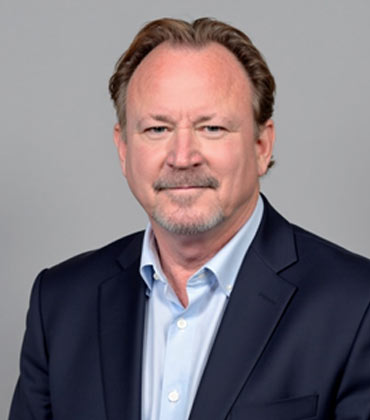
Mitchell Samuelian
When I started working in power generation more than four decades ago, nuclear reactors, hydroelectric turbines and coal boilers were the defining assets of the grid. Today, the fleets I help operate are utility-scale solar farms, gigawatt-class wind sites, large pumped-storage and battery energy storage systems. The technology has changed, but the mission has not: deliver reliable, safe, cost-effective electrons, at scale, for the long haul. What has changed is how much harder that mission has become as the renewable fleet ages, diversifies and moves from novelty to backbone of the modern grid.
The first generation of large-scale renewables is now old enough to reveal its habits. Panels that were commissioned in the early 2010s are entering their second decade. Wind turbines built during the production tax credit boom are approaching repower decisions. Inverters, trackers and collection systems that were considered state-of-the-art at construction are now candidates for replacement or overhaul. Operating these assets is no longer a construction problem. It is a maintenance, reliability and workforce problem and the industry is only beginning to organize around that reality.
Operational readiness must be designed in, not retrofitted. On projects ranging from the 550 MW Topaz Solar Farm to the 1,600 MW Raccoon Mountain pumped-storage modernization, the pattern is the same: the plants that perform best over twenty- and thirty-year horizons are the ones where operations, engineering and commercial teams sat at the same table from day one. Staffing plans, spare-parts strategies, procedure libraries and training pipelines are not overhead. They are the difference between a plant that meets its pro forma and one that does not.
“The technology is largely proven. The capital is largely willing. What remains is the harder work of running the fleet well, upgrading it thoughtfully and developing the people who will carry it forward. That is where the industry must now focus.”
Predictive maintenance is where technology is quietly transforming that equation. In 2009, we began flying aerial infrared thermography over utility-scale solar and wind sites, well before drones were commonplace. At the time, most operators still relied on string-level inverter data and periodic walk-downs. Thermography gave us a way to see failure before it happened: a hot cell, a bad connection, a failing bearing, a compromised bushing. That approach has since matured into an entire discipline of non-invasive diagnostics that now includes drones, machine-learning analytics, acoustic monitoring and continuous SCADA-based fault detection. The lesson from those early flights was simple. When you can inspect an asset without taking it offline, you find problems earlier, you fix them cheaper and you keep production up.
The harder problem is not technology. It is people. Every plant I have helped transition to owner-operated status has taught the same lesson: the tools are only as good as the team using them. Predictive maintenance software does not read its own reports. Battery management systems do not write their own operating procedures. Interconnection standards do not train their own compliance leads. The industry has spent a decade building assets faster than it has built operators, technicians and plant managers to run them. That gap is now the single biggest constraint on the energy transition.
Closing it takes deliberate work. Structured mentorship, documented procedures, apprenticeship-style field training and clear career pathways from technician to plant manager to regional director are not luxuries. They are the operating system of a durable industry. Some of the most rewarding moments of my career have been watching engineers and technicians I first met as new hires step into VP and C-suite roles at operating companies, developers and OEMs. That kind of leadership pipeline does not happen by accident. It happens when senior operators treat workforce development as a core deliverable, not a side project.
Innovation, reliability and sustainability are often framed as competing priorities. In practice, they reinforce each other when the operating model is right. A well-run plant is safer, cheaper and more productive, which frees capital to adopt new technology. A well-trained workforce absorbs innovation faster and applies it more consistently. A disciplined maintenance program extends asset life, which is itself one of the most powerful sustainability outcomes available to the sector.
The next decade of the energy transition will be won or lost on the operating floor. The technology is largely proven. The capital is largely willing. What remains is the harder, less glamorous work of running the fleet well, upgrading it thoughtfully and building the people who will carry it forward. That is the work worth doing and it is where the industry now has to invest its attention.
The articles from these contributors are based on their personal expertise and viewpoints, and do not necessarily reflect the opinions of their employers or affiliated organizations.
